
From November 14th to 16th, 2025, the 10th Soft Robotics Conference - a forum for discussing fundamental theories and key technologies, as well as a competition for innovative soft robotics design, kicked off at the Qingdao Innovation Development Base of Harbin Engineering University in Qingdao, Shandong Province. As the top academic exchange platform in the field of soft robotics in China, this conference brought together over a hundred scholars in the field, focusing on the deep integration of technological breakthroughs and industrial implementation. Beijing Soft Robotics Technology Co., Ltd. (SRT) participated in the event as a silver sponsor, hoping to deepen the "industry-university-research-application" linkage with the academic community and jointly promote the efficient implementation of cutting-edge scientific research results of soft robotics into practical industrial applications. At the booth, the company showcased a product matrix centered on flexible grasping technology and its extended applications, demonstrating the practical path of "technology as the foundation driving industry innovation".
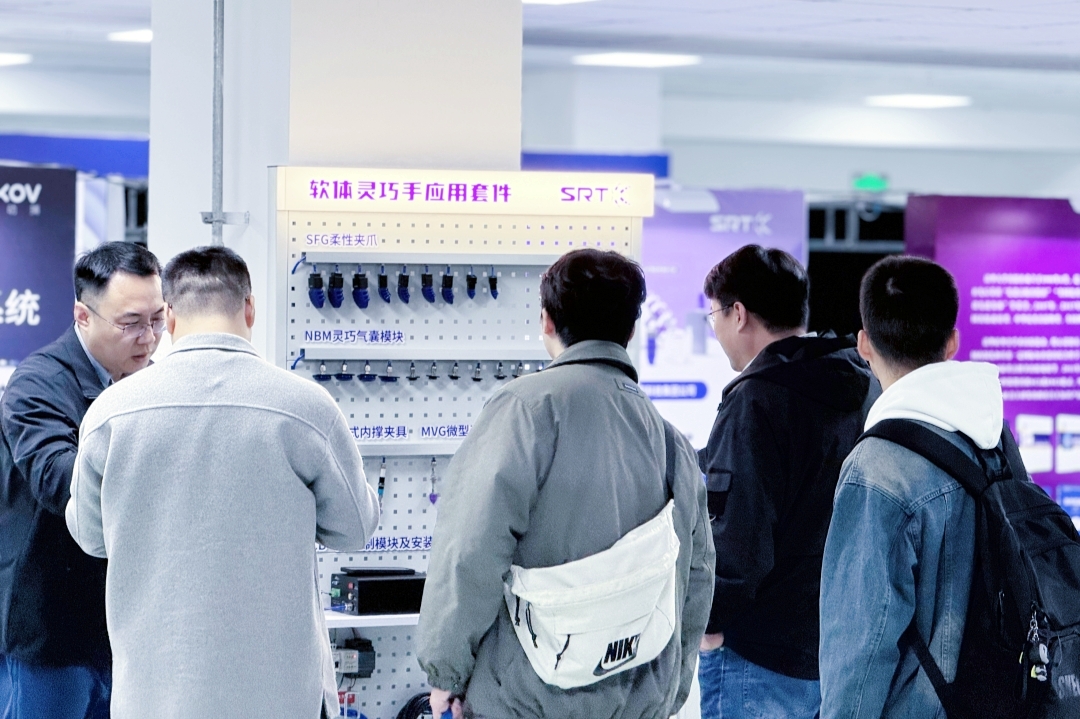
Soft robotics technology, with its infinite degrees of freedom and high environmental adaptability, is becoming a key support for the "human-machine integration" vision. SRT, as the first domestic enterprise specializing in the research and development and industrial application of soft robotics, has been deeply engaged in the "industry-university-research-application" full-process technical system for many years, continuously making breakthroughs in core technologies. Especially in the context where the automation processing of irregular and fragile items has become a common problem in multiple industries, SRT has refined the flexible grasping technology into a scalable technical foundation, through collaborative innovation in materials, structure, and drive, to build a technology system covering multiple industries. Currently, SRT has 200+ intellectual property rights related to flexible grasping technology, and its technical strength has been verified through multiple industry practices.
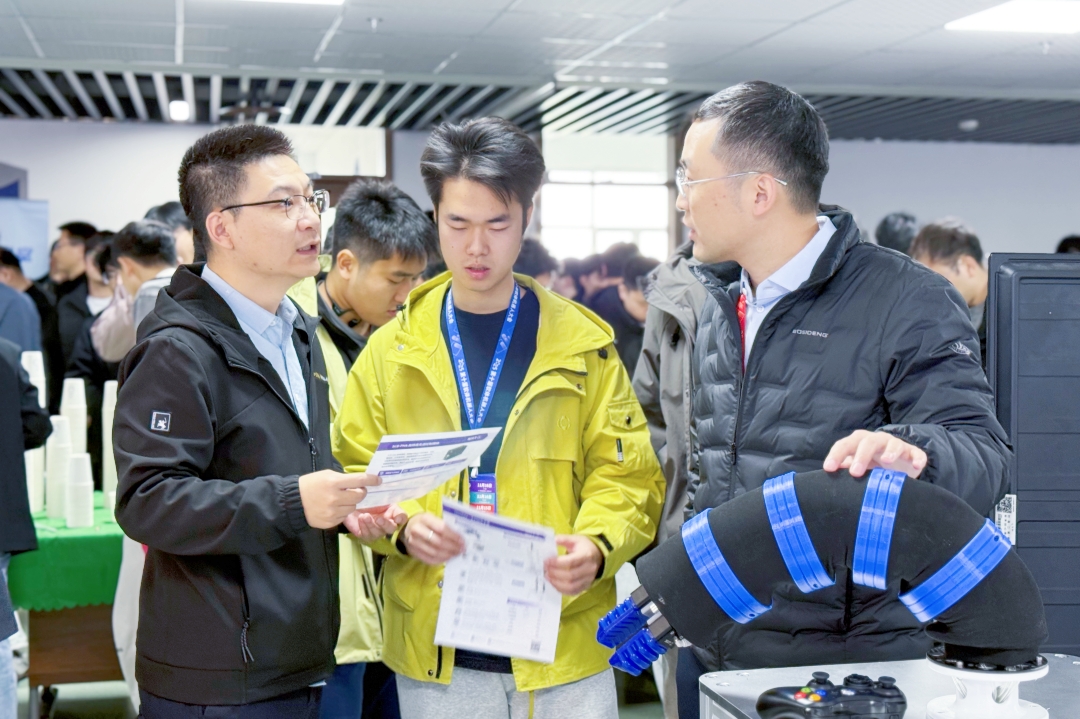
To support the wide adaptability of the technical foundation, SRT has achieved systematic breakthroughs in key technologies: optimizing modification processes and integrated molding technology based on the characteristics of flexible materials to ensure the conformality and safety of the grasping process; integrating bionic design concepts to enhance the perception and drive coordination capabilities of the flexible gripper, adapting to different shapes and materials of grasping requirements; and combining self-developed high-precision control modules to achieve millimeter-level repetitive positioning accuracy, upgrading flexible grasping from a single functional component to a technical foundation adaptable to complex scenarios. Currently, SRT has a product matrix covering 20+ industries: in the fields of food, 3C, new retail, semiconductors, and smart logistics, through flexible grasping technology, different specifications of soft robotic dexterous hands and integrated solutions have been derived, capable of adapting to the grasping of irregular and fragile items in extreme temperature and humidity environments, as well as meeting the high-speed processing requirements of precision components, and through modular design, achieving rapid model change and solution combination, adapting to multiple production scenarios.
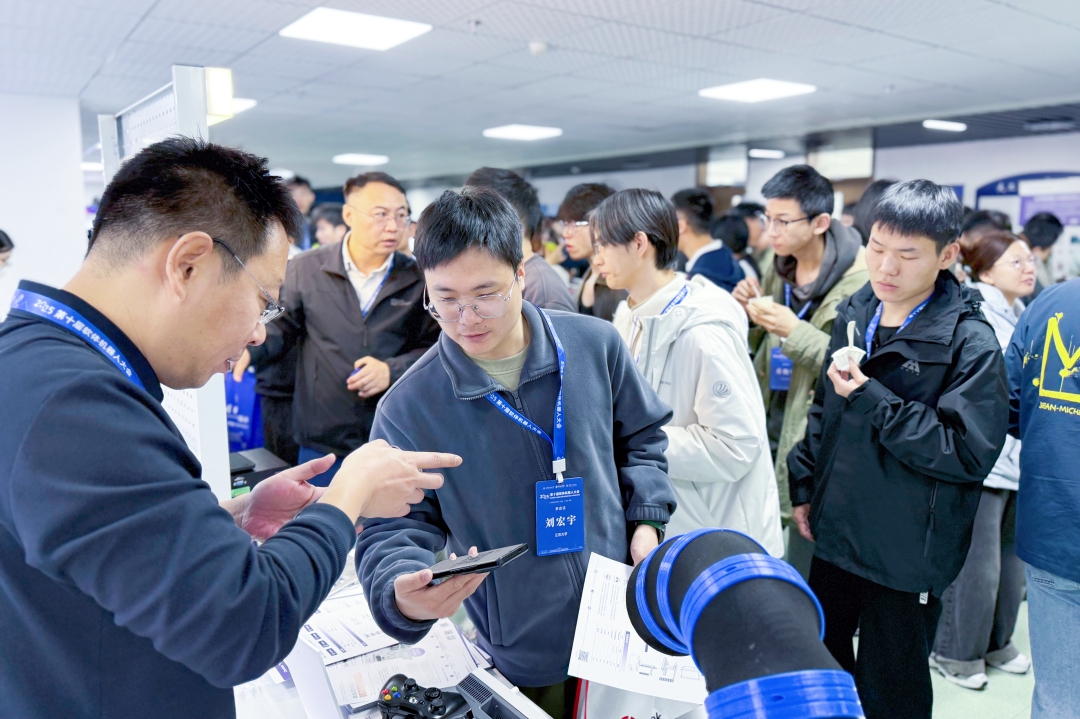
The transformation from a single flexible fixture to a full-scenario solution service provider is SRT's technical implementation logic: addressing the pain point of "damage-free handling" with flexible grasping technology, and then through the three-step strategy of "core components - functional workstations - industry solutions", forming deep empowerment covering sorting, assembly, inspection, packaging and other production processes. The demonstrated capability advancement at this conference is both SRT's commitment to "industry-university-research-application" and the result of deeply coupling academic frontiers with industrial practice. This indicates that SRT has formed flexible automation capabilities from single-point processes to full-chain. Through the integration of electronic skin and sensing technology, SRT is gradually achieving industrial substitution of complex human hand labor, promoting the implementation of the "human-machine integration" vision.