
Recently, SRT’s “Intelligent Hand Rehabilitation System: Driving Transformation in Medical Rehabilitation Technology” case was successfully featured in the Collection of Cases on New Quality Productive Forces by the Zhongguancun Talents Association. Against the backdrop of a new technological revolution unfolding both at home and abroad, this case collection comprehensively presents to readers the attempts and explorations made by various types of innovative enterprises in China in the new era as they enhance their internal drive, promote technological innovation, and cultivate their own new quality productive forces. It also injects fresh ideas and vitality into enterprises’ innovation‑driven development and transformation and upgrading.
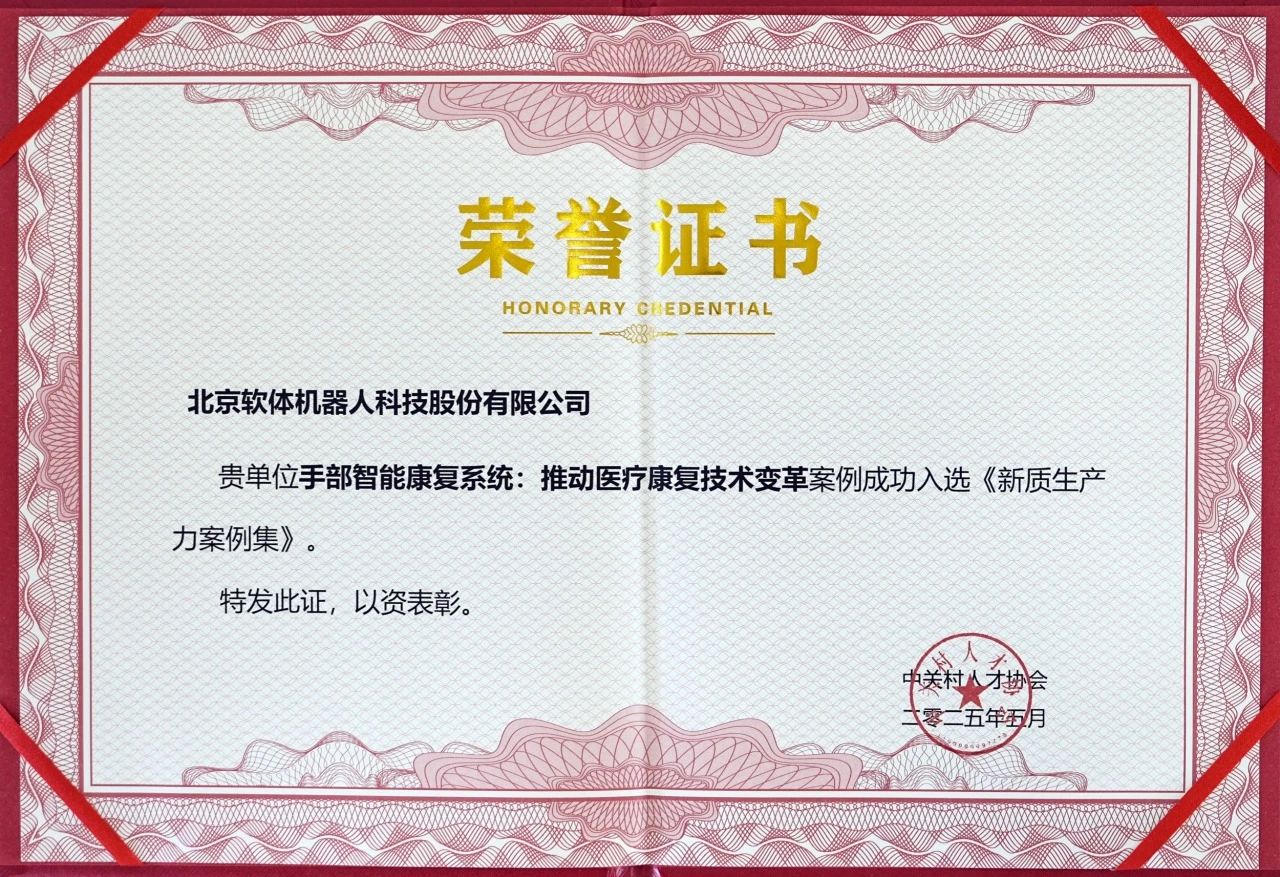
Below is the full text:
Intelligent Hand Rehabilitation System
Driving Transformation in Medical Rehabilitation Technology
Source |
58 Cases on New Quality Productive Forces ——How to Cultivate and Expand Emerging Industries
Beijing Soft Robot Technology Co., Ltd. has innovatively developed an intelligent hand rehabilitation system that integrates soft material science, intelligent algorithms, and high‑precision sensing technology. The system achieves a seamless combination of active and passive training modes with rehabilitation assessment. Through personalized rehabilitation plan customization and real‑time monitoring and evaluation, it significantly improves rehabilitation outcomes and efficiency, while effectively alleviating the shortage of rehabilitation therapists. As a model of new quality productive forces, this system not only demonstrates the company’s deep expertise and innovation in rehabilitation technology but also injects new momentum into the high‑quality development of the rehabilitation medicine industry.
In today’s rapidly changing world of globalization and technological progress, new quality productive forces have become a crucial driver of economic and social development. New quality productive forces are not only reflected in technological innovation but also encompass comprehensive innovations in industrial models, production processes, market demands, and social value. Facing the growing demand in rehabilitation medicine and the contradiction of limited resources, Beijing Soft Robot Technology Co., Ltd. (hereinafter referred to as SRT) has actively responded to the national innovation‑driven development strategy, deeply integrating cutting‑edge technologies such as soft robotics into rehabilitation medical practice, and striving to improve the overall productivity of the rehabilitation industry. Through its self‑developed intelligent hand rehabilitation system, SRT has not only solved many pain points of traditional rehabilitation methods but also promoted the intelligent and personalized development of the rehabilitation industry, providing valuable experience and a demonstration case for the wide application of new quality productive forces in the healthcare sector.
A Pioneer in Applying Soft Robotics Technology to Hand Rehabilitation
Since its establishment, SRT has always been at the forefront of soft robotics technology, committed to breaking through key technological bottlenecks across the full industry‑university‑research chain. As the first innovative technology group in China to achieve comprehensive breakthroughs in this field, SRT has taken “technology leading rehabilitation, innovation serving health” as its corporate mission, deeply applying soft robotics technology to the healthcare industry, especially in the area of hand rehabilitation.
SRT’s development journey has been full of innovation and challenges. From initial technology exploration to today’s industrial layout, the company has not only built a rich rehabilitation product system but also successfully extended soft robotics technology to the industrial automation field. It developed flexible grippers that can efficiently grasp and handle irregular and fragile items, solving the “last centimeter” problem in industrial automated production. In addition, SRT has actively ventured into machine vision AI technology, intelligent logistics warehousing systems, and semiconductor‑related process technologies, continuously expanding its technological boundaries.
With strong R&D capabilities and continuous technological innovation, SRT has established a leading position in the industry. The company has applied for nearly 300 patents, including 110 invention patents, and has been recognized as a national high‑tech enterprise, receiving multiple honors such as a national key “Little Giant” enterprise and an SRDI “Little Giant” enterprise. In the market competition, SRT has successfully secured an important position in the rehabilitation medicine and industrial automation fields, becoming a key force driving the industry’s development.
Inaugurating an Intelligent Era of Hand Rehabilitation
With the acceleration of population aging and the rising incidence of chronic diseases, the number of patients with impaired hand function has increased sharply, making the demand for hand rehabilitation ever more urgent. However, traditional rehabilitation methods face many challenges: on the one hand, training modes are monotonous and cannot meet patients’ diverse needs at different rehabilitation stages; on the other hand, assessment methods are subjective, lacking objective and quantitative data support, which affects the precise formulation and adjustment of rehabilitation plans. In addition, the shortage of rehabilitation therapists is also a key factor restricting the popularization and quality improvement of rehabilitation services.
Facing these challenges, how to innovate rehabilitation methods and improve rehabilitation efficiency and quality has become a pressing issue in the field of rehabilitation medicine. Leveraging its deep expertise in soft robotics technology, SRT decided to develop an intelligent hand rehabilitation system that integrates active and passive training modes with intelligent assessment, aiming to address new challenges in rehabilitation medicine through technological innovation and promote the transformation and development of hand rehabilitation.
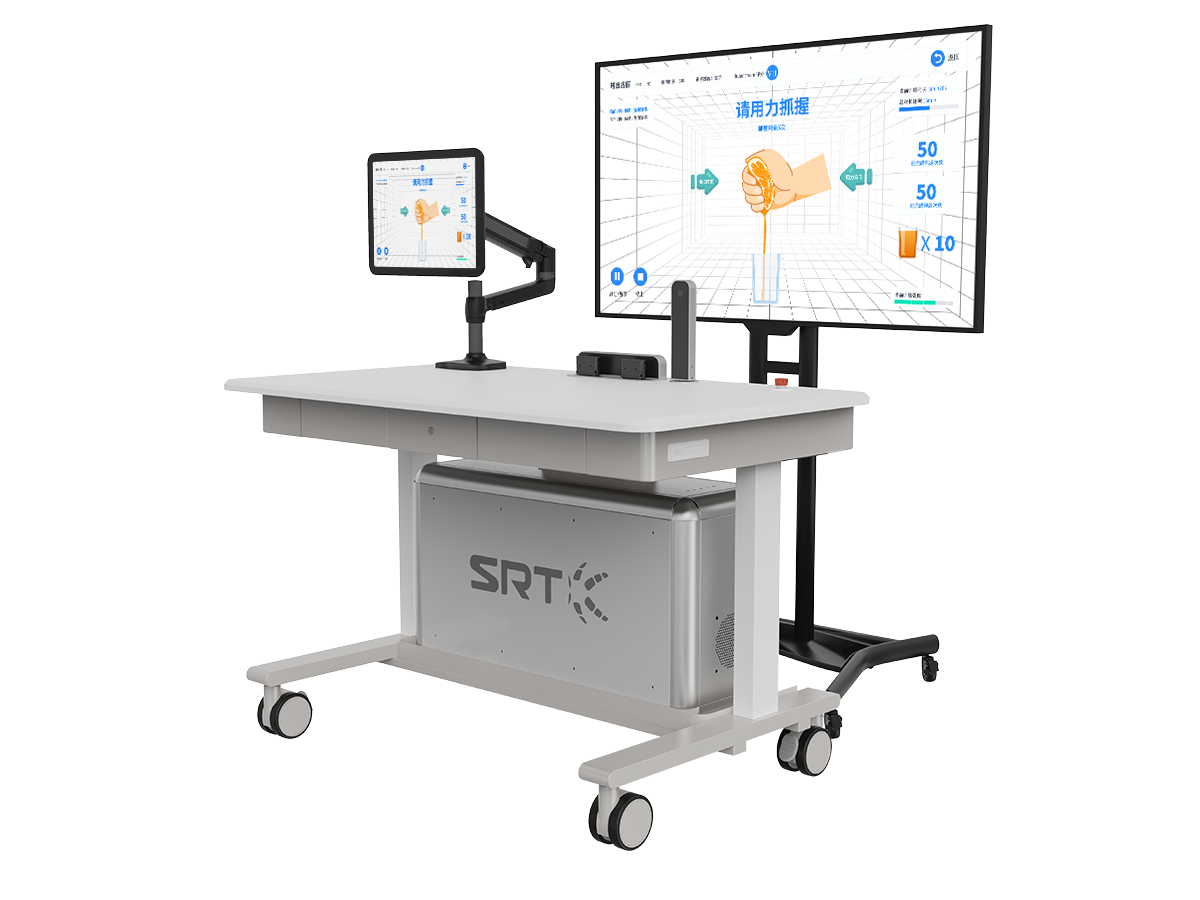
Figure 1 Soft Robot – Intelligent Hand Rehabilitation System
In response to the above challenges, the intelligent hand rehabilitation system developed by SRT demonstrates a series of core advantages:
Application of soft material science technology: The system uses advanced soft material science technology to design a training glove that offers high fit and comfort. This glove not only simulates the natural motion trajectory of the human hand, providing a more realistic and natural training experience, but also extends the product’s service life and reduces maintenance costs through its elasticity and deformation characteristics.
Integration of intelligent algorithms and high‑precision sensing technology: Built‑in high‑precision sensors and intelligent algorithm modules enable real‑time monitoring and data analysis of the patient’s training process. The sensors capture subtle hand movements and force changes, providing detailed data support for assessment. The intelligent algorithms then generate comprehensive evaluation reports, helping medical staff accurately understand the patient’s rehabilitation progress and achieve precise treatment.
Integration of active and passive training modes: The system combines the advantages of both active and passive training, allowing flexible adjustment of the training method according to the patient’s rehabilitation stage and needs. This personalized training plan not only increases patient engagement and rehabilitation outcomes but also effectively alleviates the shortage of rehabilitation therapists.
Differentiated plan management and optimized allocation of healthcare resources: By establishing a comprehensive rehabilitation plan database, medical staff can flexibly access or customize appropriate rehabilitation plans, supporting functions such as plan sharing and modification, thus achieving differentiated plan management. At the same time, the system supports asynchronous training modes, improving the utilization efficiency of healthcare resources.
During the R&D process, the SRT team overcame several technical difficulties. Led by Chief Technology Officer Bao Lei, the cross‑disciplinary R&D team included material engineers, hardware engineers, software engineers, and other specialists. Faced with various technical challenges, the team worked closely and innovated continuously, successfully resolving many key technical issues. For example, when encountering the problem of weak load capacity in traditional soft materials, the team not only optimized the existing design but also introduced new material formulations and structural designs, significantly improving product stability and performance, demonstrating the team’s outstanding technical strength and innovation capability.
Soft material design: After many trials and optimizations, the team selected a material with both high elasticity and good biocompatibility as the main component of the glove, ensuring product comfort and safety.
Sensor technology development: The team independently developed advanced signal processing algorithms, effectively increasing the accuracy and real‑time performance of the sensor data, overcoming issues such as data transmission latency and noise interference.
Clinical validation and optimization: Rehabilitation medicine experts and clinicians were invited to participate in the system design and testing process, ensuring that the system meets clinical needs and real‑world patient use. Through continuous iteration and optimization, SRT successfully developed the intelligent hand rehabilitation system and promoted its application in multiple medical institutions nationwide. This system not only improves rehabilitation efficiency and quality but also provides patients with a more personalized and comfortable rehabilitation experience. Moreover, it promotes the intelligent upgrading and personalized development of the rehabilitation industry, injecting new vitality into the progress of rehabilitation medicine.
At a Class A tertiary rehabilitation hospital in Beijing, SRT’s intelligent hand rehabilitation system was used to help a patient recover hand function. Mr. Wang, a patient at the hospital who suffered motor dysfunction due to a sudden stroke, faced serious rehabilitation challenges. The hospital’s rehabilitation team first conducted a comprehensive assessment of his hand function. Based on the assessment results, they designed a personalized rehabilitation plan for Mr. Wang using SRT’s intelligent hand rehabilitation system. He regularly performed exercises such as fist clenching, finger spreading, and pinch gripping with the help of the system. Through continuous training, he gradually regained hand flexibility and strength, significantly improving his ability to perform daily activities. Mr. Wang commented, “The rehabilitation experience is very special, and after training I can clearly feel the improvement in my finger function.”
Summary of experience in developing new quality productive forces
Through this R&D and application practice of the intelligent hand rehabilitation system, SRT deeply understands the important role of innovative technology in driving industry progress. The following are some valuable lessons we have accumulated during the project:
Deep understanding of market demand is the foundation of innovation: At the project’s outset, we conducted in‑depth market research to identify the pain points and technical difficulties customers face during rehabilitation. This precise grasp of market demand provided clear direction and goals for our subsequent technological innovation. In future product development, we will continue to strengthen our market orientation, ensuring that products effectively meet customers’ actual needs.
Cross‑disciplinary collaboration is key to innovation: The success of this project was inseparable from close collaboration among multiple disciplines, including soft material science, intelligent algorithms, and high‑precision sensing technology. By integrating knowledge and technical resources from different fields, we solved a series of technical problems and achieved innovative breakthroughs. This teaches us that in future technological innovation processes, we should place greater emphasis on cross‑disciplinary collaboration, fully leveraging the professional strengths of each field to jointly advance technological innovation.
Continuous iteration and optimization are guarantees of innovation: During product development, we went through numerous trials, tests, and optimizations before finally achieving a stable and efficient product. This made us deeply realize that innovation is not an overnight process but requires constant iteration and refinement. Therefore, in future technological innovation, we will continue to adhere to the concept of continuous improvement, ensuring that our products remain leading‑edge through technological iteration and product optimization.
Strengthening industry‑university‑research collaboration is an important path to innovation: Through close cooperation with rehabilitation medicine experts and clinicians, we successfully transformed research results into practical products. This industry‑university‑research collaboration model not only enhanced the professionalism and practicality of the product but also facilitated the rapid transformation and application of scientific achievements. In the future, we will continue to strengthen cooperation with research institutions, universities, and medical institutions to jointly promote technological innovation and industrial development.
Focus on user experience is the goal of innovation: During product development, we always put user experience first, striving to provide a more comfortable, convenient, and efficient rehabilitation experience for users. This user‑centered design philosophy not only improved the product’s market competitiveness but also won the trust and support of a wide range of users. In the future, we will continue to uphold this philosophy, constantly improving product user experience and satisfaction.
In summary, this R&D and application practice of the intelligent hand rehabilitation system has provided us with valuable experience. In future technological innovation processes, we will continue to adhere to the principles of market orientation, cross‑disciplinary collaboration, continuous iteration and optimization, industry‑university‑research collaboration, and user‑centered design, striving to contribute even more to the technological progress and industrial development of the rehabilitation medicine field.
Future Outlook
Looking ahead, SRT will continue to deepen the application of soft robotics technology in the rehabilitation field, continuously raising the intelligence level of the intelligent hand rehabilitation system. We will introduce more advanced technologies, such as artificial intelligence and big data analytics, to further optimize training outcomes and user experience. At the same time, we will strengthen cooperation with medical institutions and rehabilitation experts both domestically and internationally, promoting the widespread application and continuous improvement of the system, and supporting the progress and development of the global rehabilitation medicine field. Through unremitting efforts, we hope to provide more patients with efficient and personalized rehabilitation services, contributing to the great goal of a Healthy China.
Expert Comments
From the perspective of technology‑driven innovation: This case demonstrates the innovative application of soft robotics technology in rehabilitation medicine, driving the reform and progress of rehabilitation technology.
From the perspective of integrated industrial development: Through close cooperation with medical institutions, research institutes, and other partners, SRT has fostered a coordinated development pattern in the rehabilitation industry chain.
From the perspective of data‑driven decision‑making: The built‑in high‑precision sensors and intelligent algorithms provide powerful data support for rehabilitation decisions.
From the perspective of green and sustainable development: The application of this system helps reduce resource waste and environmental pollution during the rehabilitation process.
From the perspective of enhancing international competitiveness: SRT’s innovative practice provides strong support for China’s international competitiveness in the rehabilitation medicine field.
In summary, this case excels in technology‑driven innovation, integrated industrial development, data‑driven decision‑making, green and sustainable development, and enhanced international competitiveness, offering high promotional value and lessons worth learning.
Authors: Bao Lei, Zhang Yating, Zhao Jingjing